
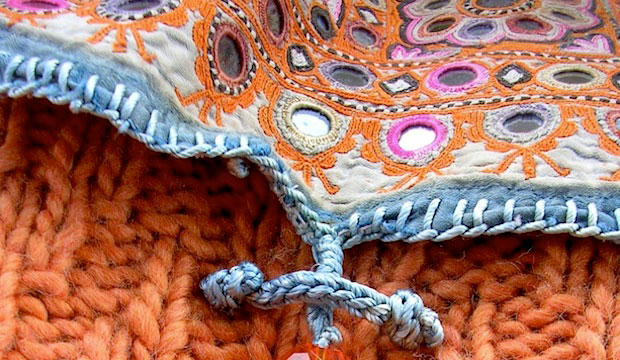
I first crossed paths with Catherine and Abit Bayar upon discovering their thoughtful artist contributions to HAND/EYE Magazine‘s blog. Since then I have been a regular follower of their collaborative efforts to promote cultural preservation and handcrafts in both rural and urban Turkey. Bazaar Bayar is not just an emporium of textile riches from beyond the Bosphorus — it is a labor of love between two individuals united in spirit with the vision of creating a lasting bridge between the past and present via the uniquely diverse threads of the handmade.
Catherine Bayar, an American now living in Turkey, candidly shares the following on Bazaar Bayar’s about page:
“A chance encounter in a small Aegean town while traveling in Turkey refocused my direction in life when I met my vintage textile expert husband, Abit. At the time, I was a clothing and interior designer in my native California with work stints in design centers around the world. Experiencing new cultures and seeing how others live and create has been the best possible design inspiration. Seeking amazing textiles and the cultures which produce them is a joy that my curious nature will never give up.”

Catherine and Abit Bayar of Bazaar Bayar envision building on the past to create sustainable futures in Turkey
“In 1999, Abit and I started Bazaar Bayar in Selçuk, the Izmir province town adjacent to the ancient ruins of Ephesus. We surrounded ourselves with woven treasures from these cultures in a small shop in the exact location where we met. I have degrees in design, but Abit grew up watching the women in his native region of Mardin (in Turkey’s southeast) weave kilims and other functionally beautiful items for their homes. Learning to weave was once a prerequisite before a woman could marry. My mother-in-law’s generation was the last to weave for themselves.”
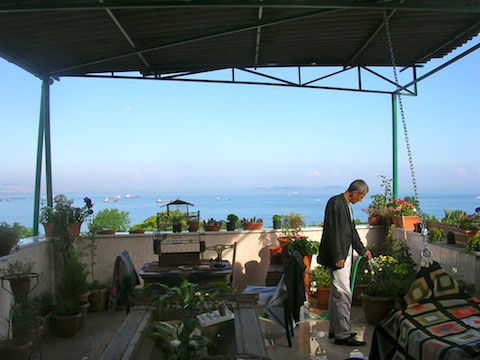
Abit Bayar tends to the terrace garden with gorgeous views out over the waters of Istanbul
Today Catherine and Abit share a wonderfully eclectic home in Istanbul with a garden terrace that is perched over their local neighborhood streets and rooftops. (I know this because they often share the most inspiring photos on Facebook). Bazaar Bayar’s scope has expanded considerably since the early days, and their connection to local artisans and visitors from around the world has created a vast network of craft-based knowledge. Their unique offerings now include vintage repurposed patchwork kilim rugs; patchwork, over-dyed carpets; knit and crochet, one-of-a-kind wearables; traditional Turkish Oya lace embellishments, Hamam knits that offer healing properties; and a selection vintage textiles and hand-stitched, re-worked accessories. They also host workshops, regional travel excursions, and skill-development clinics for women and artisans in their region.
GL: I asked Catherine what inspires her most about about her current life and commitment to work in Istanbul and the villages beyond, and she shared the following:
CB: I am deeply inspired by the depth of history and culture here – put simply. I can enjoy the perks of being in a mega-city each day, yet also feel like I am living in a seaside village. Most residents of Istanbul have dreadful commutes, but I am lucky to be able to live and work within the Old City walls (while not having to deal with hordes of tourists daily).
In California, I was always attracted to anything historical and as ancient as I could find – the Old Mission where I grew up in Santa Barbara and the Los Feliz neighborhood east of Hollywood where the original stars and directors of that industry had their homes. My travels for my clothing design work led me all over the world, but Istanbul and Venice (the Italian one, though I have lived in the California beachside community, too, are nothing like my life in Samatya. These are the two cities that continue to amaze me as I turn every corner – the architecture, the textiles, the stunning views, the essential surrounding water, the colors, the food, the crowds of people, the deserted back lanes of decaying history – everything.
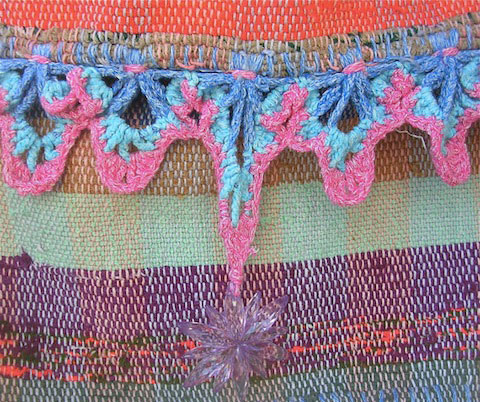
One a kind textile pieces by Bazaar Bayar create sparks with the past via resourceful modern design
GL: With such richness as an inherent part of daily life and interactions for Catherine and Abit, it seems imperative to also ask what some of the challenges are in running an operation like Bazaar Bayar – including strategies for weaving together old traditions and handcraft while building a modern design business?
CB: Our biggest challenge currently is that customers do not always know the backstory regarding the hours of labor and the sustained effort that goes into our handmade creations. Some might even think that products made outside of the U.S., Canada, or Western Europe should be considerably less expensive. I have had a rather challenging time wholesaling rugs or hand-knits because buyers want handmade, intensive work for rather low prices. Beyond this, women in Turkey are traditionally not compensated very well for what their time and talent is truly worth. Consequently, handmade becomes synonymous with luxury goods, and in these economic times, that’s not always easy to pull off in terms of sales.
Most important to me is the task of creating work for talented women here. We might actually provide better opportunities for employment in the future by creating knitwear, felted goods, and other smaller ticket items than with our signature rugs. These pieces take more time and require more units sold, but it seems to be a healthier way to merge traditional crafts with a modern sustainable business. The challenge is paying the women a good (sustainable) wage while also keeping our international buyers happy.

Bazaar Bayar’s vintage repurposed patchwork kilim in natural shades with shots of vibrant overdyed orange.
GL: Tell us a bit more about where you typically sell the majority of your gorgeous rugs and carpets and what the market is currently like?
CB: We have had a great run with repurposed patchwork and over-dyed rugs, but they are trend driven and post-peak and now not able to command the prices that they once did. Folks expect us to remain rug dealers, though, and sometimes seem confused when we throw other items into the mix. Our best rug customers are coming from Australia, Brazil, and Russia these days, while Europe and the U.S. regroup (we hope). I would prefer to continue doing a few select rugs, pillows, accessories, etc. as well as custom orders while continuing to diversify what we offer.
GL: What are your plans for Bazaar Bayar for the conclusion of 2012 and 2013? Are there new initiatives that you would like to get underway and artisans who you are hoping to work with?
CB: I am currently planning several knitwear retreat workshops for the conclusion of 2012 and 2013. They will be three day immersion weekends, mixing natural fibers with local history and culture as inspiration. We will offer good food and time to connect with new friends over the creation of hands-on projects. Though we will be targeting European and UK-based crafters, invited guests and makers in Istanbul will also be able to join us for the day or the entire weekend. We previously had a textile shop with a nargile (wine bar/café) around the corner in Selçuk, and we are missing the social elements during those years of sharing craft, food, and colorful conversation.
There are two artisans we hope to explore working with more fully. Both women are cultural hybrids like I am. (I do not consider myself an expat as much as an immigrant/global citizen/fusion of cultural elements that I pick and choose):
An American classically trained painter and former Berkshires sheep farmer, Theresa O’Brien is has been a felter in Sultanahmet for at least a decade with a third generation UNESCO heritage felter partner Mehmet Girgic from Konya. See Ikonium Studio. We have dabbled with felted and knit clothing, and are now also creating felt and knit upholstered (repurposed) furniture for our own workshop and to sell. Theresa’s eye for color and pattern is quite awesome and boundless. The duo selects their own fleeces, hand dyes the wool, weaves traditional kilims, painstakingly researched to be authentic – all in traditional ways that I wish were more common here, but are not yet.
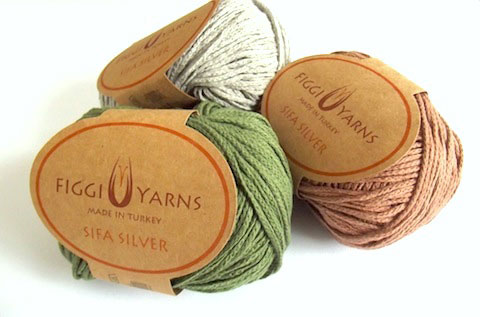
Spun ‘Sifa’ silver cotton by Figgi Yarns – all made in Turkey by local spinners
The second is a British/Turkish woman, Figi Çakır of Figgi Yarns. She started her own yarn company as a way to help rebuild her community in the wake of the1999 earthquake along the Sea of Marmara. Figi was determined to find alternatives to mass produced synthetic yarns and in turn brought together local spinners to make her own soft cotton yarns. (Turkey grows some of the world’s best cotton, yet it is often used for only the most mundane yarns).
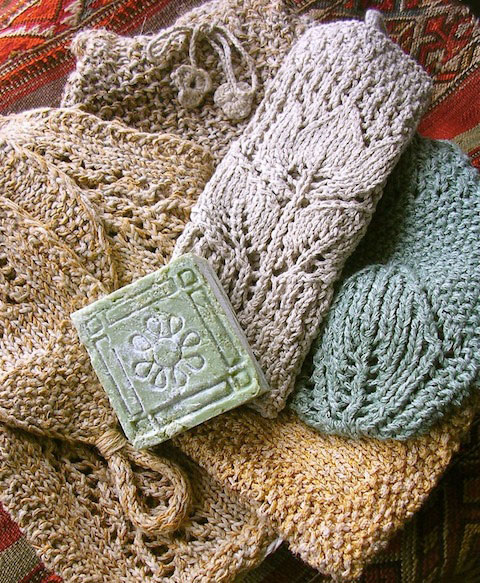
Hamam knit ‘sifa’ silver cotton offers up healing properties and homemade goodness
I particularly love their ‘Sifa Silver Cotton’ yarn – natural cotton spun with therapeutic silver called, şifa, which means ‘healing’ in Turkish. I have assisted with creating colors for their collections and also designed a few patterns, but Figgi Yarns will now be an integral part of our knitting weekends. Figi and I both look for historical Turkish influences in our knitwear designs, so will be spending the winter and beyond brainstorming about patterns to publish and collections of knitwear to produce with her yarns as well as documenting Turkish knitting techniques and stitches we’ve realized are not written in English – or even in Turkish – or anywhere frankly.
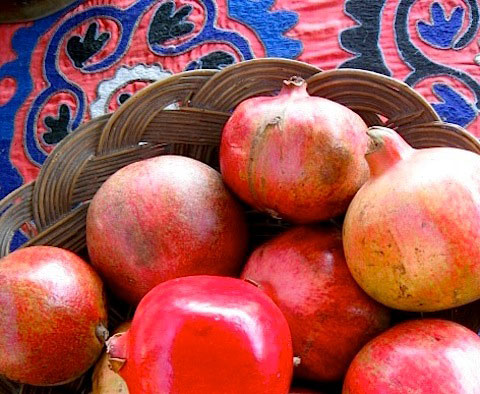
Selcuk garden harvest by Bazaar Bayar provides studio tabletop inspiration
GL: That is an impressive agenda and outline for collaborative work in the year to come. You are definitely bringing together some of the best practitioners, makers, and thinkers to create dynamic and lasting solutions for the future. In conclusion, before we share some of your beautiful work in our holiday gift guide, tell us more about the organizations Bazaar Bayar supports and feels specifically connected to.
CB: There are several, and now that I list them, I see that the first three are joint Turkish/American ventures, more bridges between my two countries, by Turks who have benefitted in the U.S. and have then come back to help their country of origin:
Turkish Philanthropy Funds: Van Kilim Workshop Project, “The Art Atelier” (supporting crafts and girls/women)
Turkish Cultural Foundation which supports a state of the art showcase store, Armaggan celebrating Turkish craft in all its forms, and DATU, a foundation working to preserve the natural dye process)
Turkish Women’s International Network (supporting/mentoring Turkish women entrepreneurs)
Cemil İpekçi (a celebrated Istanbul clothing designer with a workshop employing women in Abit’s home region of Mardin)
Nahil Üreten Kadının İş Ortağı (producing women business partners, teaching business skills and providing support)
And last but not least, The Girl Effect
—————————————————————————————————

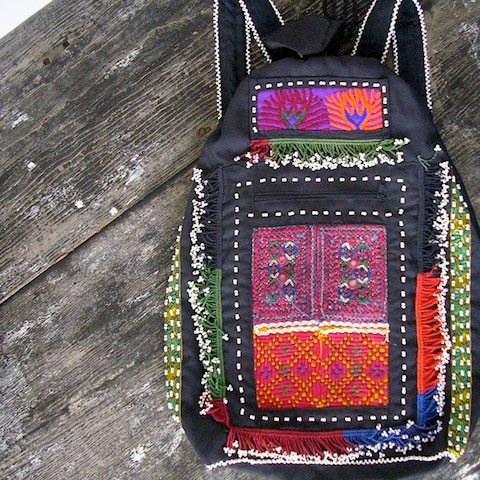
Embroidered Patchwork Backpack
Remnants from vintage Uzbek and Turkmen handstitched embroideries, once adorning costumes and decorative home textiles, are made new, patched into a modern black cotton twill daypack trimmed with glass beads. Artful and practical, this cool pack is a distinct statement of style, pattern, and collaborative chic.
$35, Bazaar Bayar

Turkish Oya Needle Lace Floral Strand
A revival of the secret language of ‘Oya’: the decorative colorful floral and fruit trimmings the women of Turkey crocheted to silently communicate with other village women. We continue this tradition by making our own Oya here in Istanbul. For more info about the craft, visit Bazaar Bayar’s site. A variety of color combinations are available, and they also accept custom orders for any color combo. This takes about 2 weeks plus about 5 days for shipping.
$25, Bazaar Bayar
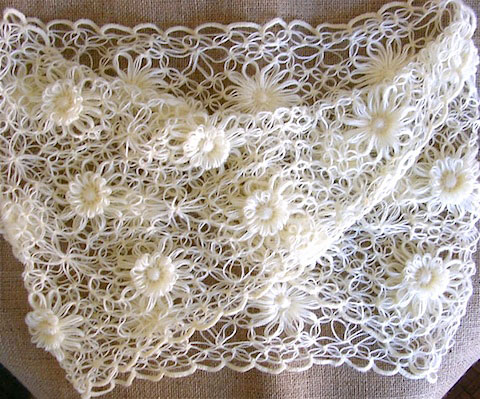
Natural Mohair Papatya Crocheted Wrap
A timeless Turkish crochet pattern, this time made new in the Bazaar Bayar half-twist wrap. A three-dimensional daisy motifs adorn a honeycomb of mohair for light-weight warmth wrapped around your shoulders, twice around your neck, or even to create a stunning, face-framing hood.
$40, Bazaar Bayar
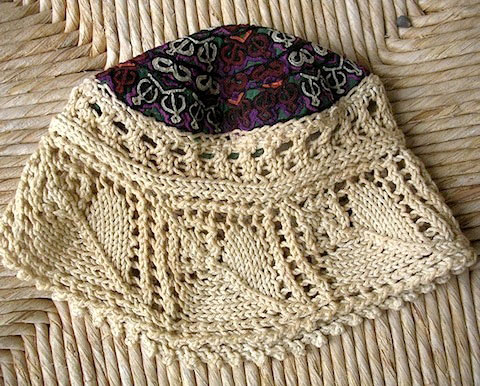
Uzbek Embroidery Lace Knit Cap
Featuring recycled textile from the intricately embroidered and multi-colored top of a Uzbek hat (hand-stitched a generation ago), this beautiful vintage bit found its way to Istanbul, where Bazaar Bayar resourcefully added a lace-like, knitted cotton tulip pattern to give it a genuinely Turkish twist.
$60, Bazaar Bayar
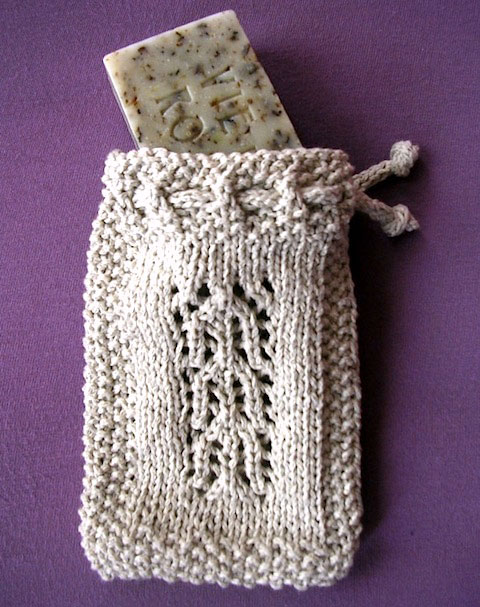
Sifa Silverized Yasmin Cotton Mitt
Sifa cotton is produced in the Northern Western Marmara region of Turkey by Figgi Yarns. Naturally grown Turkish fibers are treated with the metal silver to give them healing and soothing properties. This traditional process creates a linen-like look and a crisp hand for cleaning softly and naturally. Before the days of indoor plumbing in the majority of homes in Turkey, there was the ‘hamam’ or Turkish bath house. Whether grand or modest, the hamam was a neighborhood gathering place to not just wash up, but also to socialize with friends, catch up on local gossip, and even pick a bride for a son. In the tradition of the practical items Turkish women made to bring to the hamam, this sifa bag is a great combo piece. It holds your soap while traveling and doubles as a handmitt for washing.
$12, Bazaar Bayar
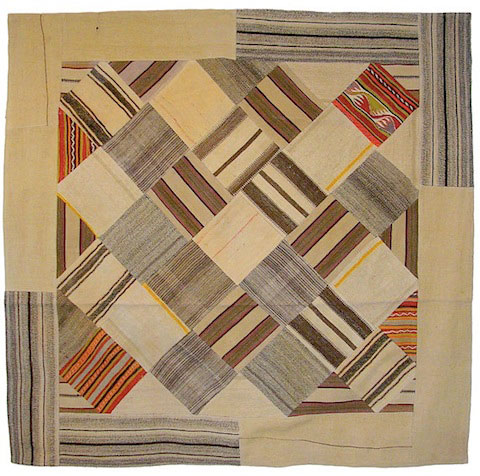
Square Vintage Patchwork Stripe and Bright Kilim Rug
Vintage repurposed patchwork kilim rug in natural shades of cream, grey and brown, with diagonal shots of bright stripes. Topstitched edges with twill backing. Measures 7’0″W x 6’11″L and is ready to ship at no extra charge. Bazaar Bayar rugs don’t just rejuvenate handwoven textiles that may have been wasted, but their sale will fund the operation of their workshop. Discarded bits and pieces are re-purposed to help women connect and create – we think that this makes sense for community building and the revival of vanishing traditional crafts.
$1,175, Bazaar Bayar
Find out more and connect with Bazaar Bayar:
Facebook / Twitter / Etsy








kara rane
November 14, 2012
absolutely stunning artwork and craftsmanship. Thank You so much for sharing~ true gifts*!