
After speaking with a number of pet owners, I am astonished by how many people feed their pets a more eco-friendly and sustainable diet than they’re feeding their human family members or themselves. Two things in particular stood out in these discussions: the simplicity lies in moderation and cost is never an issue.
“Willy will eat pretty much anything,” says Terri Coles, journalist and Willy’s owner from Toronto, Canada. “But normally he takes half a can of food in the morning and lunch and raw food for dinner with a vitamin supplement.”
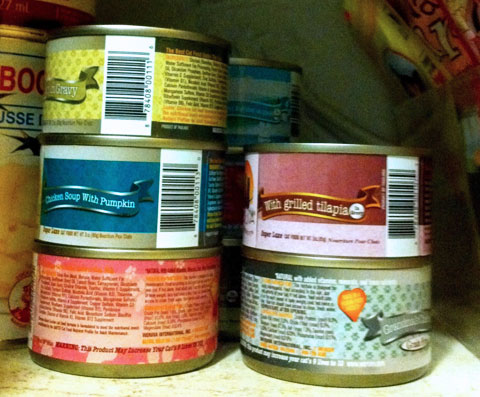
Organic Canned Food from Thailand.
Raw homemade meat, by far the most expensive and time consuming of environmentally friendly pet diets, not only ensures your pet isn’t eating preservatives or additives, but the nutrients the get from ground bones and organs is extremely nutritious. “It’s higher quality meat and actually looks like shredding chicken or pieces of raw fish.” Raw diets are great for an animals coat, teeth and energy levels, but metabolizing a raw diet can be more difficult for some animals, especially for older pets and pets with intestinal problems.
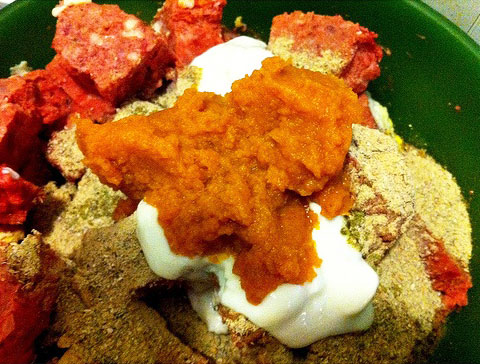
Raw mixed with yogurt (probiotics) and pumpkin puree (vitamin A) to soften stool.
“Willy got sick mysteriously and his immune system was a mess. So after, I thought I would try and make his food as unprocessed as possible. And it’s actually working out to be cheaper than buying regular canned food.”
Another great alternative to the traditional brands on the market is hormone and chemical free, organic dry or wet foods. Keep in mind however, this doesn’t always mean that the animal products in these foods meet any ethical standards. Look for ethically raised human grade ingredients for similar benefits to homemade food, without the added time of preparing raw. And don’t forget to keep an eye out for recycled packaging as well!
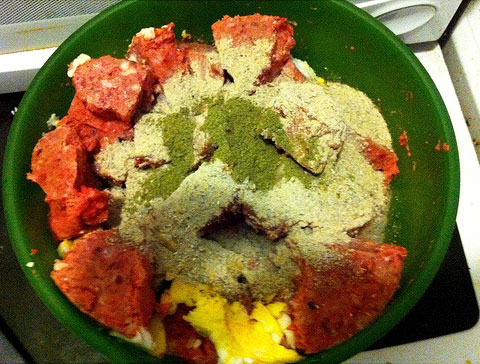
When it comes to pet food, you should always look for ethically raised ingredients, just like we do for our own food.
The best way to judge the right food for your pets is by being aware of the ingredients and clear about the potential risks and benefits of each option. Whether it’s kibble, wet food, or raw; the perfect balance is up to you — the owner. Like the old adage, “too much of a good thing”, a little bit of variety goes a long way.
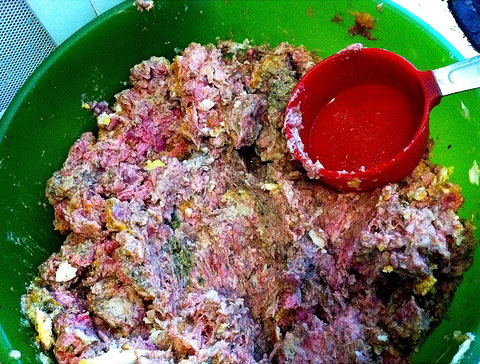
The best way to judge the right food for your pets is by being aware of the ingredients and clear about the potential risks and benefits of each option.
The differences between dietary needs of a dog as opposed to those of a cat are a little less obvious than you might initially think. In the wild, cats and dogs are on very different playing fields, and as domestic pets the variety of nutritious food accessible to them is comparable in the same kind of way. As omnivores, dogs need a balance between meat protein and plant nutrients, whereas cats are carnivores and only eat meat.
Top photo by ChuckThePhotographer, Creative Commons.