“We are part of the problem and we want to be part of the solution.” Believe it or not, that statement comes from a fast food restaurant. Swedish fast food chain Max is trying to pioneer its’ industry by labeling all meals with the amount of carbon dioxide they cause in the making.
The environmental impact of each meal and product have been analyzed by the environmental organization The Natural Step, an NGO active in eleven markets that assists companies striving to actively take on more environmental responsibilities.
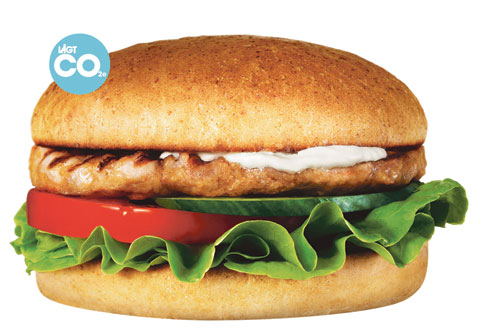
Carbon-labeled Max Delifresh chicken burger.
Max is responsible for putting about 29 000 tons of carbon dioxide into the atmosphere every year, about 70 percent of which comes from the beef. By reading the carbon labels, patrons can make informed choices about their meal and know what effect it has on the environment (hamburgers range from 0.8 to 2.9 kg CO2e). Carbon information is available for each menu item and is displayed clearly on the menu boards in all restaurants.
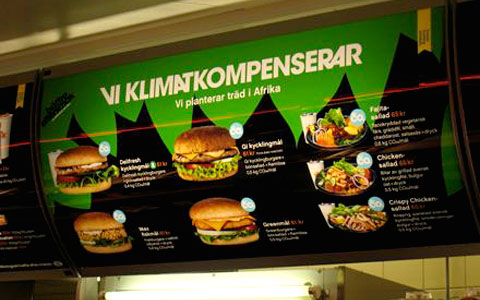
Menu boards clearly display carbon labels.
Isn’t Max scaring customers away to other fast food joints that are still havens of ignorance? Talking to BBC’s Tom Burridge, company spokesman Par Larshans insists they are not “shooting themselves in the foot” and is quick to remind us of the “less-meat products” on the menu. “We think you need to be honest with the customer. We hope to change the whole of the fast-food industry by this,” he says. “We want people to eat less meat.” Beef burger alternatives include fish burgers (0.2 kgCO2e and made with only Marine Stewardship Council-certified fish), falafel burgers (0.2 kgCO2e), falafel boxes(0.3 kgCO2e), three kinds of chicken burgers (0.3 – 0.4 kgCO2e), chicken nuggets (0.2 kgCO2e/9 pcs), and greenburgers (0.3 kgCO2e).
To minimize pollution from transportation, only Swedish beef and chicken is used in all restaurants (which in a country roughly the size of California could be considered somewhat locally sourced). Meals can be ordered with vegetable sides like salad, bean salad or carrots. During the growing season, a majority of vegetables are also sourced from within the country.

Instead of french fries: Max side salad…
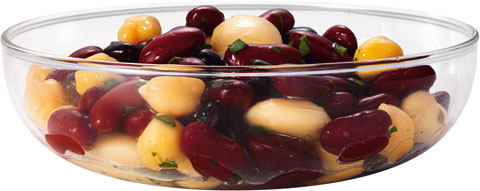
…or bean salad.
Besides the carbon labeling, Max is doing a number of things to minimize its environmental footprint: All restaurants are powered by wind and lit by low-energy LEDs, only Marine Stewardship Council-certified fish is on the menu, the coffee served is organic and fair-trade, corporate cars are powered by bio fuel, and each employee is only allowed to use one cup for beverages all day. Restaurants also recycle corrugated cardboard and all electronic devices. The staff is also educated in the Max environmental school and internal corporate awards for best environmental practice are given to the branches that come up with the best green ideas.
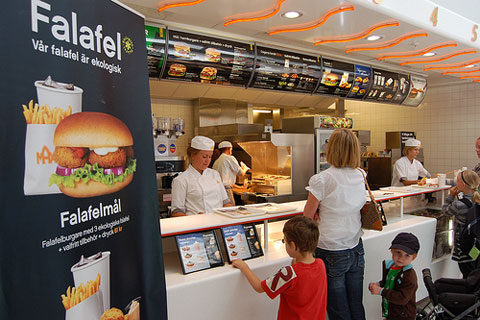
Max offers a variety of meatless options, including organic falafel. Image via opengreenmap.org
To compensate the amount of carbon dioxide the business as a whole is responsible for, Max is working with Plan Vivo on a tree planting project in Africa, an initiative battling one of the major global hazards, the devastation of forests (responsible for about 20 percent of the negative climate effects globally).
Max Hamburgerrestauranger started out in 1968 as a small grill in the far north of Sweden. A family company, it is currently run by the two sons of founder Curt Bergfors. With 64 restaurants, it is the second largest hamburger chain in Sweden. Growing up, I preferred their burgers simply because they tasted better. Everything is made right when you order it, which means it does not sit under heat lamps waiting to get slapped on your tray seconds after you place the order. You have to wait a few minutes, but it is very much worth it for the fresh juicy burgers. I was excited to learn that Max is taking a lead in the industry when it comes to environmental awareness, showing others how a fast food chain can step up to and begin to take responsibility for its effects on the environment.
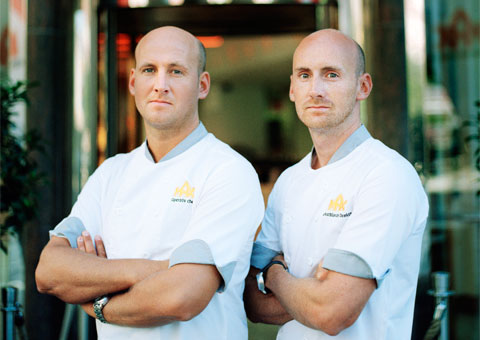
Together, the Bergfors brothers run the company their father started in 1968.
“The initiative lends power to Max’ guests as it gives them an opportunity to choose considering the environmental impact. For Max, compensating the business total pollution by investing part of the profit in planting trees in Africa, will constitute a constant reminder that it will pay off to step up their CSR initiatives,” says Professor Karl-Henrik Robèrt, founder of The Natural Step.
Yes, it’s still fast food and that is not good. But, this long term commitment towards successive and constant improvement of environmental corporate policy is a step in the right direction for an industry in dire need of transformation, and that deserves praise.
Top photo by paul in Skellefteå.